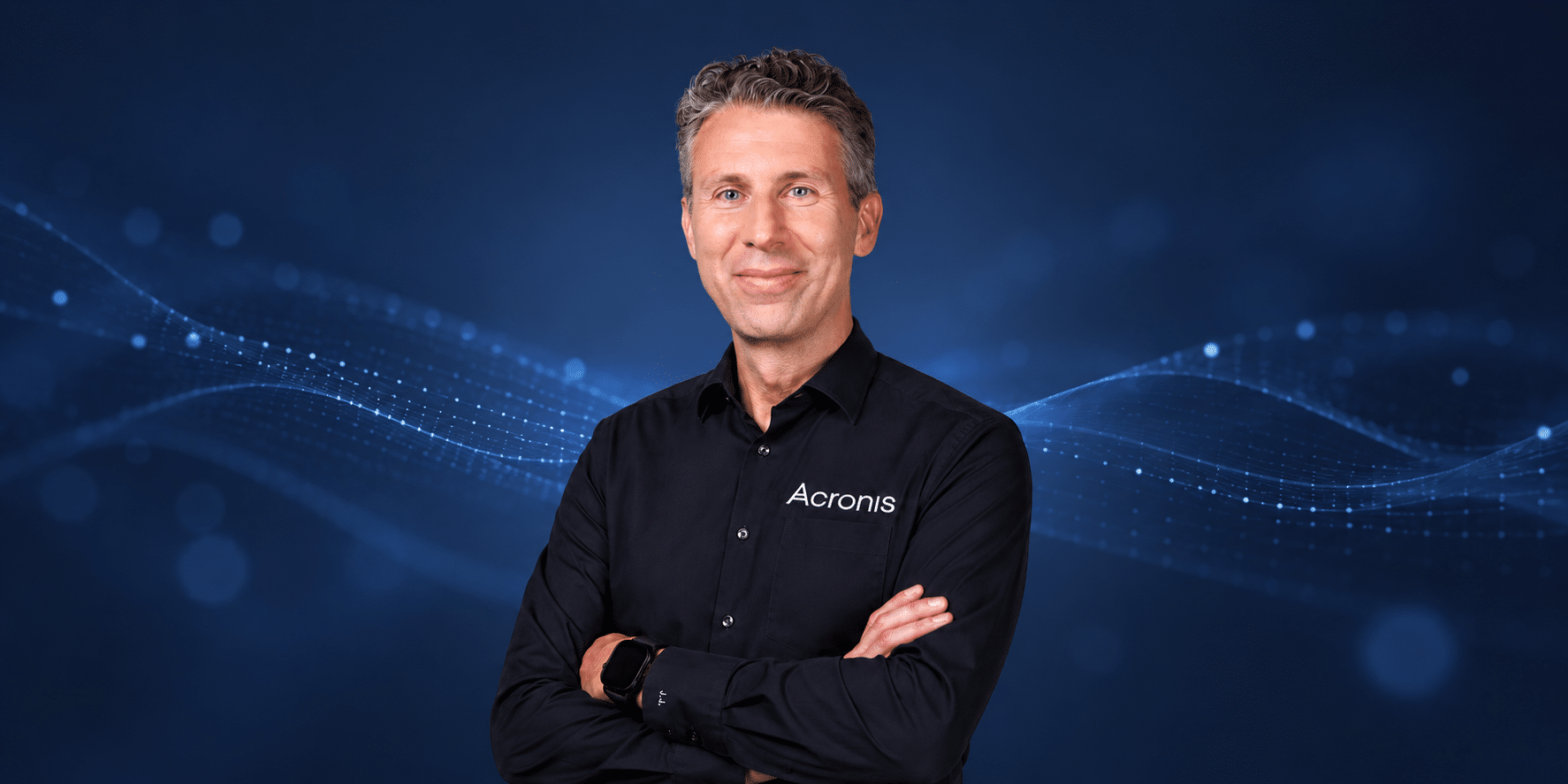
Jan-Jaap (JJ) Jager returned to Acronis in 2025 at what he describes as a familiar inflection point: the beginning of another major industry shift. As CEO, Jager is steering Acronis’s evolution from a cybersecurity-centric platform into what the company calls an AI-native platform for Autonomous IT Operations, a transformation he believes will outpace even the shift from on-premises to Cloud that defined his earlier tenures at the company. Before this latest chapter, Jager burnished a career spanning Microsoft, Parallels, Chainstack, and Virtuozzo; giving him a rare vantage point on infrastructure, automation, and platform economics across very different technology eras.
In this conversation with MSP GLOBAL, Jager explains what “autonomous” really means for an MSP’s day-to-day operations, why he sees the current AI shift as bigger and faster-moving than previous industry transformations, and how MSPs can start adopting AI without losing control over security-critical decisions. He also shares candid advice for MSP leaders who remain skeptical about handing operational tasks to AI systems, and explains why he sees events like MSP GLOBAL as essential to how the industry navigates this transition together.

You rejoined Acronis in 2025 after leading Chainstack and serving as COO of Virtuozzo. What made this the right moment to come back, and how do those roles shape the strategy you’re now bringing to Acronis?
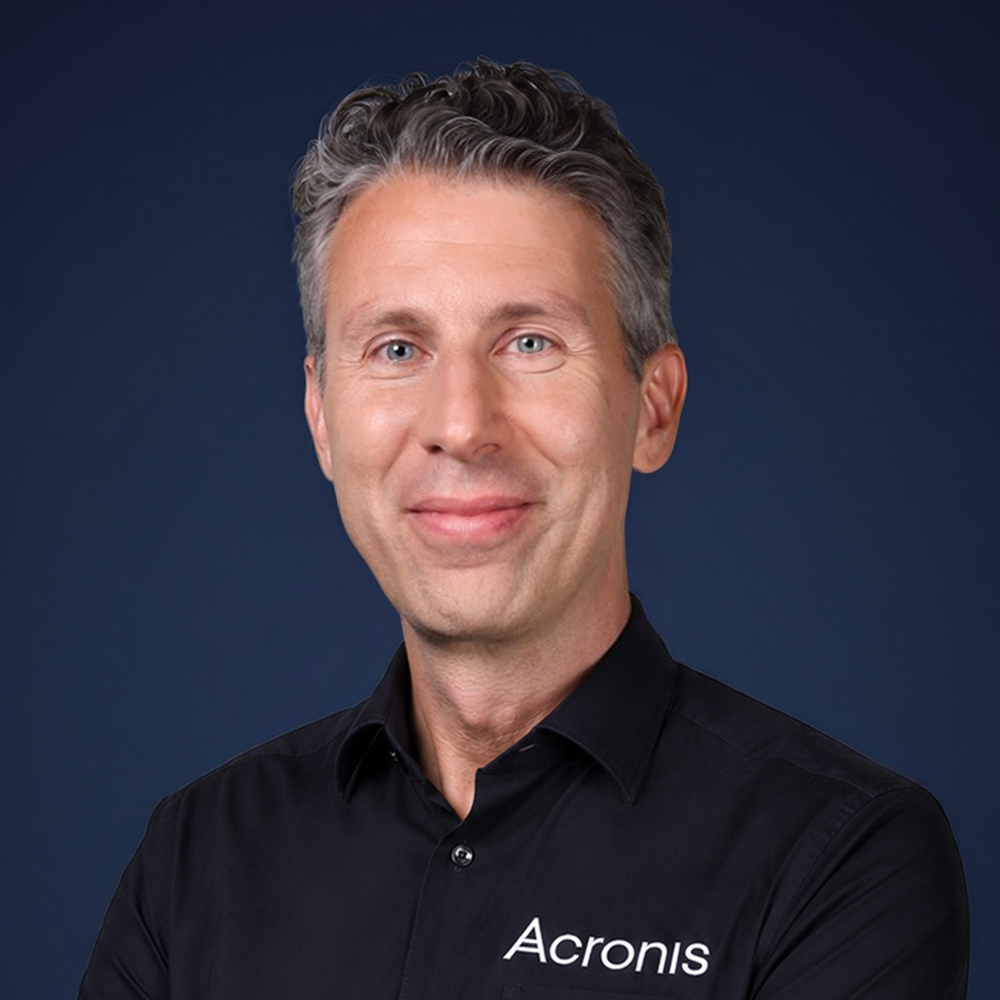
I actually never left.
I was not operationally involved the last couple of years, but I stayed very connected to the company and to many of the people I had worked with over the years. Acronis has been an important part of my professional life, and many of the relationships I built there became long-term friendships.
It is also not the first time I have come back. In fact, each time I returned, Acronis was at the beginning of a major industry transition.
The first time, I came back to help build the Cloud platform as the industry was moving from on-premises software to Cloud. That platform became the foundation of the Acronis we know today. The next transformation was from backup into integrated cyber protection.
Now we are at the beginning of another major change: from cyber protection toward Autonomous IT.
I believe AI will create an incredible amount of opportunity. Not only for MSPs, but for how IT is managed inside companies more broadly. It will change how software is built, how IT services are delivered, how technicians and IT teams work, and ultimately how much of day-to-day IT operations can be automated.
That is what made coming back so compelling. Acronis already has the technology, the platform, and the ecosystem to play an important role in this transition. The opportunity now is to bring protection, management, automation, infrastructure and AI together into a platform that can help MSPs and internal IT teams manage increasingly complex environments with much greater levels of automation.
My experience at Chainstack and Virtuozzo reinforced that view. I stayed very close to infrastructure, automation, and the economics of operating technology at scale. Ultimately, technology only matters if it creates better outcomes: greater productivity, better economics and the ability to scale.
So for me, coming back felt both very natural and very timely.
Acronis describes itself as an AI-native platform built around Autonomous IT Operations. What does “autonomous” actually look like in an MSP’s daily workflow, and how far are we from that being standard practice rather than aspiration?
For me, there is a simple distinction between AI-assisted and Autonomous IT.
AI-assisted means the technician still does the work, but AI helps. Autonomous IT means the system can understand what is happening, decide what needs to be done, and execute within predefined boundaries.
Today, an alert comes in and a technician investigates, gathers context, decides what to do, and executes the fix, often across multiple tools. In an autonomous model, much of that workflow happens automatically. The technician gets involved when judgement, approval, or an exception requires it.
Autonomous does not mean uncontrolled. The MSP defines what AI can do automatically, what requires approval, and what stays with a human.
And the agents need to work together. Otherwise, we simply replace tool sprawl with agent sprawl.
This will not happen overnight. It will happen workflow by workflow, with more autonomy added as the technology proves itself and trust grows.
The outcome is simple: technicians spend less time on repetitive work and more time where their expertise matters. And for MSPs, growth no longer needs to mean adding technicians at the same rate as customers and endpoints.
That is ultimately what Autonomous IT should deliver.
You were part of Acronis’s earlier transformation into a Cloud-based, MSP-first, cybersecurity-centric partner. How does the current AI-native shift compare in scale or difficulty to that earlier repositioning?
The earlier transformations were significant. We moved from on-premises to Cloud, and then from backup to integrated cyber protection.
I believe the AI transformation will be even bigger, and it is happening much faster.
Cloud changed how technology was delivered. AI changes how we build technology, how IT is operated, and how services are delivered to customers.
For us, that means AI cannot simply be another feature or another tool. It has to become part of the foundation of the platform and how we operate as a company.
That is why we think about it in three ways: By AI, With AI and For AI. By AI is how we use AI to transform how we build and operate Acronis. With AI is how we bring AI into the daily operations of MSPs and IT teams. And For AI is how we help them manage, govern, and protect the growing use of AI by their customers and employees.
So the scale is bigger than the previous transformations. It changes our own company, our platform and ultimately how our partners and customers operate.
Cybersecurity has been central to Acronis’s MSP value proposition for years. As AI takes on more operational decision-making, how do you think about the balance between automation and the human oversight MSPs still need for security-critical calls?
Autonomous does not mean uncontrolled.
AI should be able to handle more analysis and execution, but within boundaries defined by the MSP. Routine, well-understood actions can increasingly happen automatically. Higher-risk decisions, particularly those affecting sensitive data, business continuity or critical infrastructure, need stronger controls and, where appropriate, human approval.
The important thing is that those boundaries are defined upfront. MSPs also need full visibility into what the AI did, why it did it and under which policy.
Over time, more actions will become autonomous as the technology proves itself. But accountability remains with people.
Trust in Autonomous IT will not come from promising that AI can do everything. It will come from consistently proving that it does the right things, within the right controls.
Your background spans Microsoft, Parallels, Chainstack and Virtuozzo, companies with very different infrastructure and platform philosophies. What’s one lesson from that mix that’s directly influencing product decisions at Acronis today?
The biggest lesson for me is that complexity does not scale.
Across Microsoft, Parallels, Chainstack, and Virtuozzo, I have seen the same pattern: customers want choice, but they do not want to manage dozens of disconnected products, consoles, agents, and integrations.
Microsoft taught me the power of a broad platform and ecosystem. Parallels, Chainstack, and Virtuozzo reinforced how important openness, infrastructure choice, and operational simplicity are.
That directly influences how we build Acronis today.
Protection, management, infrastructure, intelligence and automation need to work together as one platform. At the same time, we cannot create a closed world. Partners need to connect the technologies they already use and choose the infrastructure that makes sense for each customer.
So the principle is simple: integrate where integration removes complexity, and stay open where choice creates value.
That is how you give MSPs the benefits of a platform without taking away flexibility.
Many MSPs are cautious about handing over operational control to AI systems, especially around client infrastructure. What would you say to an MSP leader who’s skeptical about adopting autonomous operations right now?
The AI revolution is already here. Your customers are using it. Your competitors are using it. Your technicians are using it.
So skepticism is healthy. Waiting is not.
This does not mean handing over complete control to AI. Start with one workflow, define the boundaries, keep human approval where it matters and measure the result. Then expand.
But MSPs also need to look beyond their own operations. Their customers are already adopting AI, often without the security, governance or operational controls they need.
That creates both a responsibility and a major opportunity.
MSPs became trusted advisors through the Cloud transition and then through cybersecurity. They now need to become the trusted advisors for AI as well: helping customers adopt it, manage it, protect it and govern it.
And you cannot credibly advise customers on AI tomorrow if you are not learning how to use it yourself today.
Acronis has been a partner of MSP GLOBAL as the community works to bring MSPs together around these shifts. What role do you see events and communities like MSP Global playing as the industry navigates this AI transition?
The technology is moving too fast for anyone to learn everything alone.
Events like MSP GLOBAL matter because they bring the community together to compare experiences, learn from peers and understand what is actually working in the market.
It is also where you see what is new, what is gaining momentum and where the next opportunities are emerging.
For us, it is equally important to listen. The best feedback comes from partners who are using the technology in real customer environments.
And the fact that MSP GLOBAL continues to grow is itself proof that the community wants to come together, learn and navigate these changes collectively.
Looking at the next two to three years, what does success look like for Acronis’s AI-native platform, and how will MSPs be able to tell it’s working?
Success is when the platform materially changes how MSPs operate and grow.
Our differentiation is that we are bringing cyber protection, IT management, automation, infrastructure and AI together in one integrated platform. Most MSPs today still have to connect multiple products, consoles, agents and data sets themselves. That complexity limits automation.
Over the next two to three years, we want much more of that environment to operate autonomously: detecting issues, understanding context, taking action, and escalating only when human judgement is needed.
MSPs should see the result very clearly: fewer repetitive tasks, faster resolution, more endpoints managed per technician, better service levels, and better margins. Growth should no longer require adding people at the same rate.
But there is a second part. Their customers will increasingly need help adopting, managing, protecting, and governing AI. MSPs have the opportunity to become the trusted advisor for that transition.
If Acronis helps partners run their own operations much more efficiently, while also enabling them to create new services and new revenue for their customers, then we have succeeded.
What’s one piece of advice you’d give MSPs who are trying to figure out where to start with AI adoption, without getting overwhelmed by the pace of change?
Don’t start with AI. Start with a problem.
Pick one repetitive task that consumes time, creates delays, or frustrates technicians or customers. Understand the process, define what a good outcome looks like, and then decide where AI can improve it.
Start with something frequent enough to matter, measurable enough to prove value, and controlled enough to automate safely.
And don’t create another layer of complexity by adding dozens of disconnected agents and tools. AI needs to be governed and orchestrated as part of the wider operation.
Start small, measure the result, learn from it, and then scale.
Want to hear more from leaders like JJ Jager shaping the future of the MSP industry? Acronis returns to MSP GLOBAL 2026 (October 21–22, PortAventura, Spain) as a Diamond Plus Sponsor. Register now to join the conversation live.