Gartner predicts that $234 billion in enterprise application spending will be exposed to “agentic arbitrage” by 2030. While software vendors are worrying about what that means for licensing models, MSPs should be asking a different question: how do we become indispensable in an agent-driven world?
A Shift Bigger Than Software
The technology industry has never been short of dramatic terminology. Cloud-native. Hyperautomation. Zero trust. Each arrives with the promise of changing everything before eventually settling into the everyday vocabulary of enterprise IT. This year’s contender is agentic arbitrage—a phrase that sounds like it belongs in the stock exchange rather than the server room.
Yet behind the finance-bro label lies one of the most significant shifts in enterprise technology since organizations first embraced SaaS. If Gartner’s forecasts prove accurate, it will change where value is created across the technology ecosystem.
That Gartner estimate at the top of the page represents around one-fifth of enterprise SaaS spending. That sounds alarming until you look more closely at what is actually changing. This is not a prediction that businesses will stop buying software; rather that they will stop interacting with it in the ways vendors have traditionally expected—with profound consequences for anyone whose business depends on charging for human users.
Why the Traditional Software Model Is Under Pressure
For the last three decades, enterprise software has been designed around the assumption that people log into applications to complete tasks. A salesperson opens the CRM, exports figures into a spreadsheet, checks stock levels in an ERP system, updates a project platform, and sends a message to colleagues before moving on to the next customer. Every stage requires another interface, another password, and—this is the big one for software vendors—another licensed user.
Agentic AI breaks that chain. Instead of humans moving information between systems, intelligent agents can perform those actions directly through APIs, coordinating multiple applications in the background while the employee sips substandard office coffee and waits for an outcome.
As Gartner observes, the software itself doesn’t disappear—it just becomes invisible. That has huge implications for vendors whose commercial models are built around per-seat licensing. If fewer people need direct access to applications, the relationship between user numbers and revenue begins to weaken, with organizations potentially licensing agents rather than employees in the future.
“As organizations increasingly use agentic AI systems, the user interface is no longer a differentiation. Legacy SaaS market share will be cannibalized by incumbents and taken by new entrants delivering horizontal agentic platforms.”
Gartner
Why This Is Good News for MSPs
At first glance, this looks like a story about software vendors. In reality, it’s a story about the growing importance of technology partners.
As applications become less visible, the infrastructure that connects them becomes more critical. Every AI agent needs access to multiple systems, authenticated identities, carefully managed permissions and reliable infrastructure. It needs clean data, well-designed workflows and governance that determines exactly what it can and cannot do.
Businesses don’t simply deploy autonomous agents and hope for the best. Someone has to build the foundations, connect the platforms and ensure everything continues operating safely once automation begins.
That is exactly where MSPs create value.
The industry’s most successful providers have already evolved beyond fixing IT problems. Today they help customers modernize infrastructure, improve cybersecurity, streamline operations, and navigate increasingly complex technology environments. Agentic AI doesn’t diminish that role—it expands it.
The Next Generation of Managed Services
Your average homeowner doesn’t have a favorite brand of pipe: they just want their sinks and toilets to work. By the same token (as it were), customers are unlikely to ask, “Which AI platform should we buy?” Instead, they’ll ask how they can automate customer onboarding, speed up finance processes, or reduce repetitive administration without increasing risk. Those are business challenges rather than technology purchases, and they require trusted advisers rather than software resellers.
For MSPs, this creates opportunities to develop entirely new service offerings, including:
- Designing and implementing AI-powered business workflows
- Integrating applications through APIs and automation platforms
- Managing identity, permissions and AI governance
- Monitoring AI agents for security, compliance and performance
- Optimizing automated processes as customer requirements evolve
These services generate ongoing value rather than one-off implementation projects, strengthening long-term customer relationships while creating new recurring revenue streams.
Trust Becomes the Ultimate Differentiator
If AI agents are making decisions and taking actions on behalf of employees, governance becomes every bit as important as automation itself. AI doesn’t only retrieve information; it can update records, trigger transactions, communicate with customers and influence business outcomes. That raises obvious questions around accountability, compliance and security.
Gartner warns organizations not to grant autonomous agents unrestricted permissions, arguing that every level of autonomy should be treated as a deliberate governance decision rather than a technical convenience. Designing those guardrails, monitoring agent behavior, and ensuring regulatory compliance could become one of the defining managed services of the next decade.
The businesses that succeed won’t necessarily be those deploying the most AI. They’ll be those deploying it safely.
Better Margins Through Smarter Automation
There is another reason why this transition should excite MSP leaders. Like many service businesses, MSPs continually balance customer demand against the availability of skilled technical staff. Agentic AI offers an opportunity to automate repetitive internal processes while allowing engineers to focus on the work customers genuinely value.
Routine ticket triage, documentation, maintenance scheduling, monitoring, and administrative workflows are all candidates for intelligent automation. The goal isn’t replacing engineers but making them significantly more productive. Higher productivity improves margins, allows providers to support more customers without proportionally increasing headcount and creates more time for strategic consulting rather than reactive support.
History suggests this is how technology transformations usually unfold. Virtualization didn’t eliminate infrastructure specialists. Cloud didn’t remove the need for architects. Cybersecurity automation didn’t replace security professionals. Each shift automated routine work while increasing demand for higher-level expertise. Agentic AI appears likely to follow the same pattern.
The Opportunity Is Bigger Than AI
Perhaps the most encouraging aspect of Gartner’s analysis is that it doesn’t describe the future as the end of enterprise software. Instead, it argues that SaaS will evolve into a different form. Applications remain essential, but they increasingly become components within AI-driven workflows rather than destinations where employees spend their day.
That changes where customers perceive value. Increasingly, they won’t judge technology partners by the number of products they can supply, but by the business outcomes they can deliver. Can they streamline operations? Improve resilience? Reduce costs? Enable growth? Those are the questions that matter in an agentic world.
For ambitious MSPs, agentic arbitrage should not be viewed as another disruptive technology trend. It is a signal that the industry is moving beyond managing infrastructure towards orchestrating intelligent business operations.
Providers that develop expertise in AI governance, systems integration, automation and business process optimization won’t simply adapt to this change—they’ll help define it.
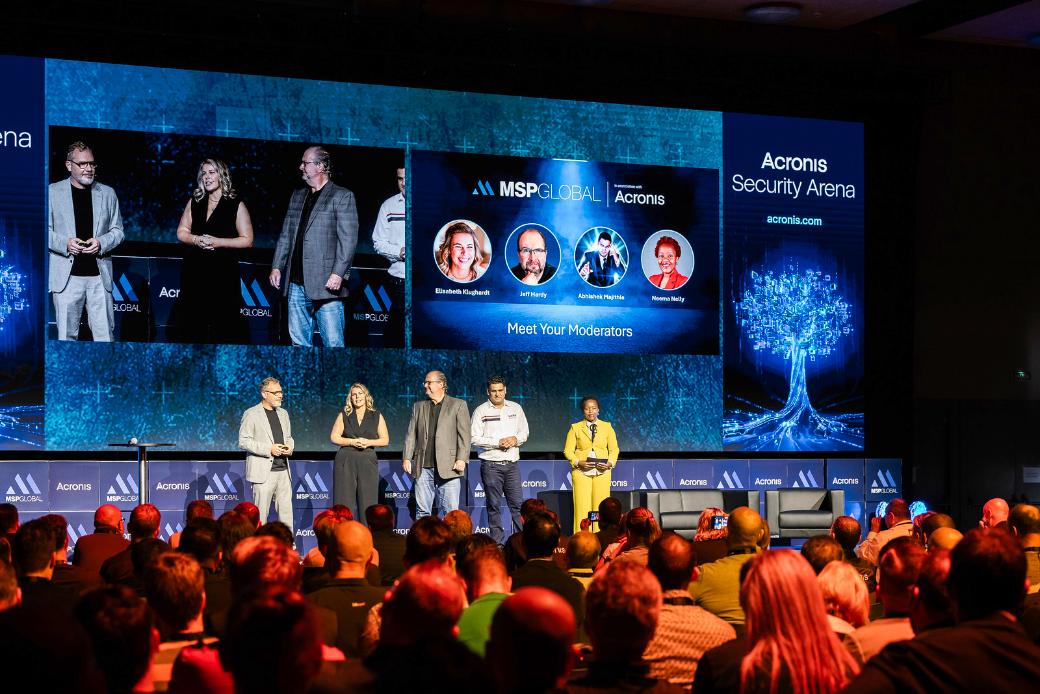
At MSP GLOBAL, we’ll be exploring the latest approaches to creating growth through agentic services—including the business models, platforms, and providers reshaping the market.
Sign up for the newsletter (below) to get your free code, then register here. We’ll see you in Barcelona, October 21-22.