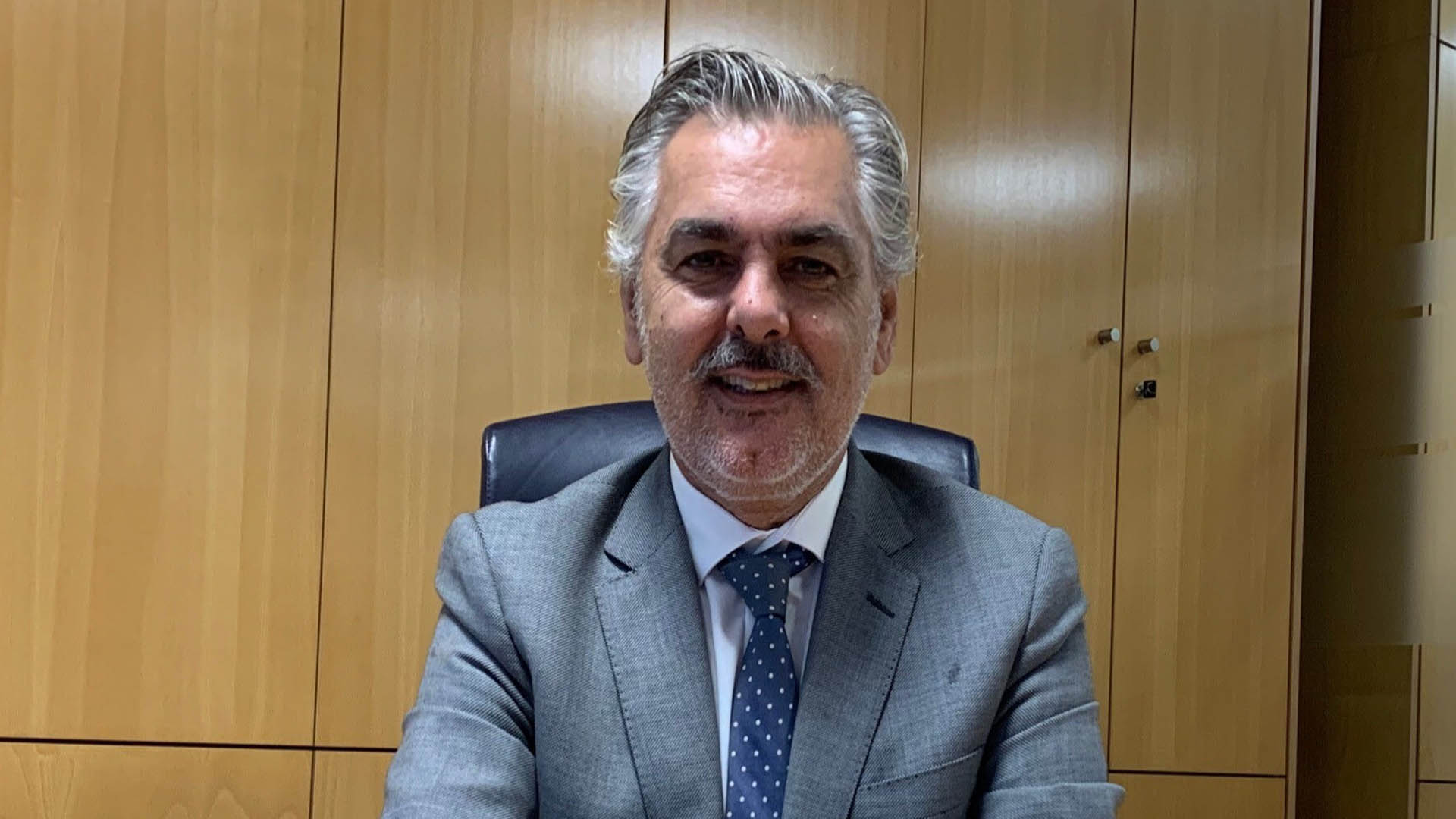
Juergen Domnik has spent his career on both sides of the MSP equation: 23 years inside Dell Technologies’ channel organization; and now, as founder of JUDOCON, he helps MSPs figure out whether their growth is actually built to last. It’s a question he put bluntly to a packed room at CloudFest 2026: are you scaling, or just getting bigger? His answer draws on a ten-dimension maturity framework that keeps surfacing the same pattern: Sales outrunning service delivery, founder-dependency masquerading as culture, and KPIs that measure activity instead of strategy.
Ahead of MSP GLOBAL, we sat down with Juergen to talk about where fast-growing MSPs quietly break, how vendors and MSPs keep misreading each other’s business models, why security should be sold on risk reduction rather than tooling, and what five years of consolidation will do to the generalists still trying to be everything to everyone. He also gives us a preview of what to expect from the Expert Stage, which he’s hosting this year, and why it’s the one thing on the agenda worth clearing your calendar for.

At CloudFest 2026 you asked fast-growing MSPs whether they’re actually built to sustain their pace. What’s the most common gap you see between an MSP’s growth rate and its operational foundation?

Growth rate vs. operational foundation
The most common gap is that sales outgrows service delivery. New contracts get signed faster than processes, documentation and staff can absorb them. Many fast-growing MSPs still run on the founder’s knowledge and a few key technicians who know where everything is. That holds up at 30 customers and breaks at 80, usually showing up as missed SLAs, burned-out engineers and rising churn. When we assess MSPs across ten dimensions, Sales and Portfolio often score well ahead of Service Operations and People and Organisation. Growth isn’t the problem, but growth that isn’t balanced across those areas is.
You spent 23 years on the vendor side at Dell before moving to independent transformation consulting. What does the MSP-vendor relationship get wrong most often, from both sides?
The MSP-vendor relationship
Vendors too often treat MSPs as a sales channel instead of as businesses with their own economics. They push volume targets, certifications and program tiers that don’t fit how an MSP makes money. MSPs make the opposite mistake: they see vendors as suppliers to squeeze on price rather than partners who can help with enablement, marketing funds and roadmap input. After 23 years at Dell, I can say the best partnerships I saw were the ones where both sides were open about their business models. If a vendor understands your margins and you understand their priorities, you can build something that works for both. Without that, it stays transactional, and transactional relationships rarely survive the next price change.
On the “Beyond Protection” panel you discussed turning cybersecurity into a revenue stream rather than a cost center. What’s one concrete way an MSP can start monetizing security today?
Monetizing security today
Stop giving security away as part of the base contract and make it a clearly defined, tiered offering. Start with a security baseline assessment for existing customers. It’s easy to sell, delivers immediate value and almost always shows gaps that lead to follow-up services. From there, you can package managed security into tiers with clear outcomes, such as monitoring, awareness training and incident response readiness. Regulations like NIS2 help, because customers now have a compliance reason to invest. The key is to sell security by the risk it reduces, not the tools it uses.
You’ve written about KPIs, OKRs and MBOs as tools that “bring strategy to life.” Where do MSPs typically go wrong translating strategy into metrics that actually drive behavior?
Translating strategy into metrics
The typical mistake is measuring what’s easy to count instead of what reflects the strategy. MSPs track tickets closed, utilization and revenue, but rarely customer retention, share of recurring revenue or service profitability per customer. The second mistake is having too many metrics, so nobody knows what really matters. Third, metrics often don’t reach individual roles, so the strategy lives in a slide deck and not in people’s daily work. Good KPIs and OKRs make it clear to a technician or account manager how their work contributes to the company’s goals. If a metric doesn’t change a decision or behavior, it’s just reporting.
Consolidation and M&A activity keep reshaping the MSP landscape. From your transformation work, what should an MSP get in order internally before it becomes an acquisition target, or an acquirer?
Getting ready for M&A
Whether you’re buying or being bought, the first question is always: how much of this business depends on a few individuals? Buyers pay for recurring revenue, standardized processes, clean contracts and a stack they can integrate. They discount heavily for founder dependency, undocumented customer environments and a patchwork of custom deals. Acquirers need the same discipline, plus a repeatable integration playbook, otherwise every acquisition becomes a costly one-off. I recommend a structured maturity assessment long before any M&A conversation starts. It shows you where the value leaks are while you still have time to fix them.
AI is now baked into most vendor roadmaps and MSP tooling. Is it changing how you advise MSPs to structure their service offerings, or is it still more hype than operational reality?
AI: reality or hype?
It’s both, depending on where you look. In service operations it’s already real: ticket triage, documentation, first-level support and automated reporting are delivering measurable efficiency gains today. Where it’s still more hype is the idea that MSPs can simply bolt “AI services” onto their portfolio without the skills or a clear customer use case. What I do advise is to rethink pricing, because if AI makes delivery much more efficient, per-hour or per-ticket models erode margins quickly. Outcome-based and per-user models age much better. And MSPs should help their customers adopt AI securely, which ties back into security and governance.
You do pro bono mentorship for people navigating career transitions in this industry. What’s the leadership gap you see most often in MSPs scaling past the founder-led stage?
The leadership gap past the founder stage
The most common gap is the missing middle management layer. Founders are usually strong technically or commercially, but they hold on to too many decisions for too long. The first leaders are often promoted because they were the best technicians, not because they were prepared to lead people. Without training and clear responsibilities, they end up as overloaded senior engineers with a title. Scaling means the founder has to move from doing the work to building the organization that does it. That’s a personal transition as much as a business one, and it’s where mentoring can make a real difference.
If you had to bet on one thing that separates the MSPs still standing in five years from the ones that get squeezed out, what would it be?
The one thing that separates the survivors
My bet is on focus. The MSPs still standing in five years will know exactly who their customers are, what they’re best at and what they won’t do. Generalists who try to serve everyone with everything will be squeezed between large consolidated players on one side and specialized boutiques on the other. Focus drives everything else: a sharper portfolio, more efficient delivery, more credible marketing and better people. It also makes it easier to say no to the wrong customers. Scale matters, but a clear position matters more.
You’re hosting the Expert Stage this year: is there anything else on the agenda you’re personally looking forward to catching? How do you think Expert Stage sessions specifically help MSPs, and why shouldn’t people skip them?
The Expert Stage
What makes the Expert Stage valuable is that these are practitioners sharing real playbooks, numbers and mistakes on growth, pricing, security, AI and compliance, not product pitches. So don’t let your meeting schedule swallow the day: come to the Harvard Room, because a single session can give you something to put into practice the week you get back.
Want to hear more from Juergen in person? He’s hosting the Expert Stage at MSP GLOBAL—real playbooks, real numbers, no product pitches. Grab your free pass and meet him at PortAventura.